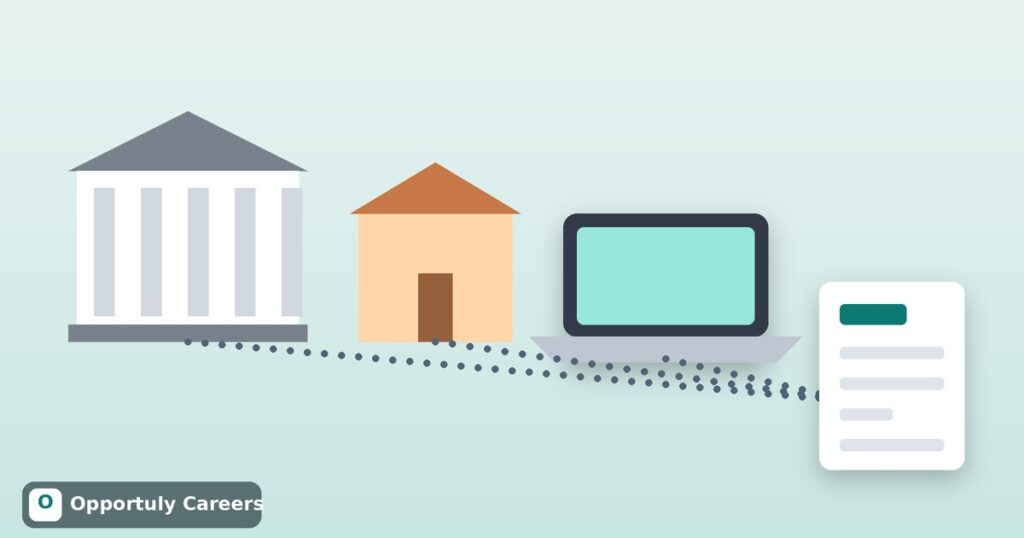
Search for a personal loan and you will find big national banks, regional banks, credit unions, online-only lenders and comparison marketplaces. Each type works differently, and the same borrower can receive very different offers from each. Knowing how they compare, and how to check them, makes it easier to choose.
This guide explains the main types of lenders, how they are regulated and what to ask before you apply. We do not review or rank individual lenders, and we do not quote any rates or fees; always use the lender’s own disclosures.
Traditional banks
Large and regional banks offer personal loans to new and existing customers. Some give existing customers simpler applications or relationship discounts.
What to know:
- Banks are supervised by federal and state regulators. Deposits at FDIC-insured banks are protected up to the legal limit, which you can read about on the FDIC’s deposit insurance page.
- You can confirm a bank’s FDIC insurance with BankFind.
- Eligibility criteria can be strict, and some banks only lend in certain states.
Credit unions
Credit unions are not-for-profit, member-owned financial cooperatives. You must usually join, based on where you live, work or other links, before borrowing.
What to know:
- Federal credit unions are regulated by the NCUA; you can learn more at MyCreditUnion.gov.
- They may be more flexible with members who have limited credit.
- Federal credit unions can offer small-dollar payday alternative loans under 12 CFR 701.21.
Online lenders and marketplaces
Online lenders take applications entirely on the web or in an app. Some are banks; others are non-bank lenders or platforms that partner with banks. Marketplaces show offers from several lenders after one form.
What to know:
- Many offer prequalification with a soft inquiry.
- Non-bank lenders are generally licensed and supervised by state regulators. You can find your state regulator through the Conference of State Bank Supervisors.
- When you use a marketplace, read its privacy policy: your details may be shared with several lenders.
What every lender must tell you
Whatever the type, lenders must disclose the APR, finance charge, amount financed and total of payments before you are bound by a closed-end loan, under the Truth in Lending Act and Regulation Z (12 CFR 1026). Lenders must also follow the Equal Credit Opportunity Act, which prohibits discrimination and requires a notice explaining a denial (12 CFR 1002.9).
Questions to ask any lender
- What is the APR, and is the rate fixed or variable?
- Is there an origination fee, and is it deducted from the loan?
- Is there a prepayment penalty?
- How and when will funds be sent?
- What happens if I pay late, and what hardship options exist?
- Do you report payments to all three credit bureaus?
- Are any add-ons, such as insurance, optional?
How to spot a fake lender
Scammers often use names similar to real banks. The US Postal Inspection Service warns that advance-fee loan scams claim to work for legitimate institutions and then ask for payment upfront. Protect yourself:
- Type the lender’s address yourself rather than clicking links in messages.
- Never pay a fee to “unlock” a loan.
- Check licences with your state regulator and FDIC or NCUA status where relevant.
- Report fraud at ReportFraud.ftc.gov.
Official FDIC tool. We are not a lender and do not take applications.
Comparing offers from different lender types
Offers from a bank, a credit union and an online lender are only comparable if they are for the same amount and term. Ask each for a quote on identical terms and line them up on APR, fees, monthly payment and total of payments. Also compare the practical side: how quickly funds arrive, whether you can choose your payment date, whether there is a discount for automatic payments and how easy it is to reach a person if something goes wrong. A slightly higher APR can sometimes be worth it for better hardship options, but write down why you are choosing it.
Which type suits you?
- Existing customer with good credit: compare your own bank’s offer with one credit union and one online lender.
- Limited or damaged credit: a local credit union may be worth asking first.
- Need speed: online lenders often decide quickly, but compare the total cost.
- Prefer face-to-face help: a branch-based bank or credit union.
Frequently asked questions
Are online lenders safe?
Many are legitimate and regulated, but check licences and never pay upfront fees.
Do credit unions have better rates?
Sometimes, but not always. Compare actual offers.
Is my information shared on loan marketplaces?
It may be shared with partner lenders. Read the privacy policy.
Can I apply with several lenders?
Yes. Prequalify first, then formally apply to the one you choose.
Sources
- FDIC – Deposit insurance
- MyCreditUnion.gov – About credit unions
- eCFR – Regulation Z
- Conference of State Bank Supervisors
- USPIS – Advance-fee loan scams
Related guides
- Personal Loans With Bad Credit or “No Credit Check”: Risks and Safer Options
- How to Compare Personal Loans: APR, Fees, Prequalification and Total Cost
- Debt Consolidation Loans: When They Help, When They Don’t and What to Check
- Why Personal Loan Applications Get Rejected and What to Do Next
Opportuly Careers is an independent guide. We are not a bank or lender, we do not receive applications and this article is general information, not financial advice.